Eye Health Guide
Glaucoma: The Silent Thief of Sight — Early Signs, Screening and Why 40+ Adults Should Test
Glaucoma causes permanent vision loss without pain or obvious early symptoms. The only reliable protection is regular screening — especially after age 40.
What is glaucoma?
Glaucoma is a group of eye diseases that damage the optic nerve — the cable that carries vision from the eye to the brain. In most cases the damage is linked to raised pressure inside the eye. Because the most common type (open-angle glaucoma) causes no pain and no early visual disturbance, many patients lose a significant portion of their side vision before they ever suspect a problem.
Vision lost to glaucoma cannot be recovered. But diagnosed early, it can almost always be controlled with drops, laser or surgery — which is why screening matters so much.
Early warning signs — and why most people miss them
Open-angle glaucoma typically has no symptoms until it is advanced. The first change is usually a slow loss of peripheral (side) vision, which the brain cleverly fills in, so you don't notice it. By the time central vision is affected, the damage is severe.
The less common angle-closure glaucoma can present suddenly and is an emergency.
- Gradual loss of side vision (usually unnoticed by the patient)
- Bumping into objects on one side, or missing steps
- Halos or rainbow rings around lights
- Sudden severe eye pain with headache, nausea and blurred vision (acute angle closure — seek emergency care)
- Frequent changes in spectacle power in a short time
Who is at risk?
- Everyone above 40 years of age
- Anyone with a parent or sibling who has glaucoma (risk is 4–9 times higher)
- People with diabetes or high myopia (minus power)
- Long-term steroid users — tablets, inhalers, skin creams or eye drops
- People with high blood pressure, migraine or thyroid disorders
- Anyone with a previous eye injury
How glaucoma screening works
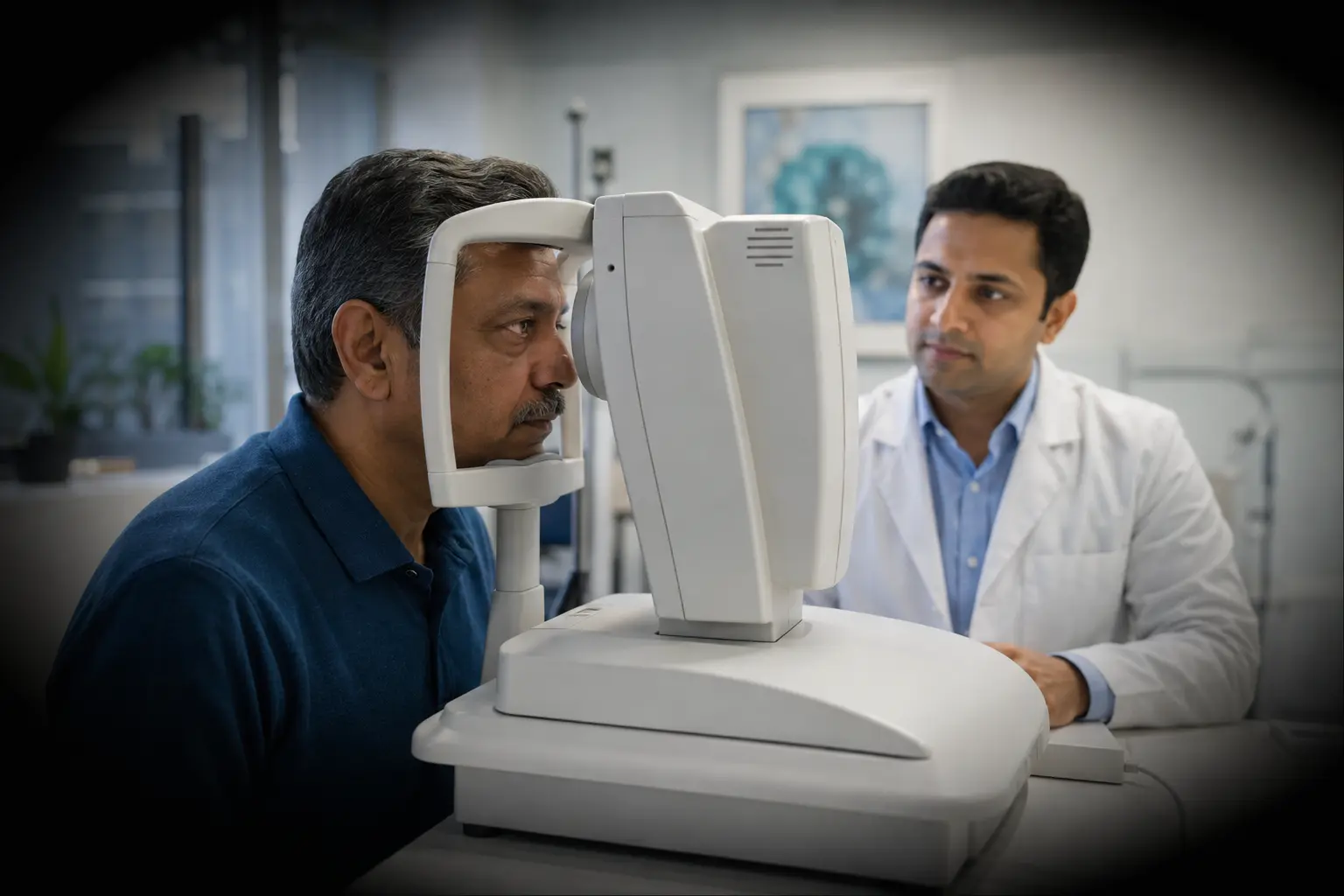
A glaucoma evaluation is quick, painless and non-invasive. At Dr. Murkute's O2 Bone & Eye Care Clinic it typically includes measurement of eye pressure (tonometry), examination of the optic nerve head under the slit lamp, assessment of the drainage angle, and — where indicated — visual field testing and OCT imaging of the nerve fibre layer.
No single test diagnoses glaucoma; the diagnosis comes from combining these findings over time. That is why a baseline examination at 40, repeated every 1–2 years, is the most reliable safety net.
Treatment: controlling pressure, protecting vision
The goal of all glaucoma treatment is to lower eye pressure to a level safe for your optic nerve. Most patients start with once-daily pressure-lowering eye drops and remain stable for years — provided they use the drops consistently. Laser treatment (SLT or YAG iridotomy) and surgery (trabeculectomy or MIGS) are options when drops are insufficient or not tolerated.
The most important point: glaucoma drops control the disease but do not cure it. Stopping them lets the pressure rise again silently. Regular follow-up with visual field tests confirms that your vision is being protected.
FAQ
Common Questions About This Topic
Keep reading
More Eye Health Guides
Eye Health
Cataract Surgery Recovery: A Day-by-Day Timeline with Do's and Don'ts
Modern phacoemulsification cataract surgery takes about 10–15 minutes, but knowing what to expect each day after surgery makes recovery smooth and stress-free.
Read articleEye Health
Dry Eye Syndrome: Why Screen Time Is Drying Out Your Eyes — and What Actually Helps
If your eyes burn, feel gritty or water excessively after a day at the computer, you may have dry eye disease — one of the most common conditions we treat in Pune's IT workforce.
Read articleEye Health
Diabetes and Your Eyes: Why Every Diabetic Needs an Annual Retina Check
Diabetes can damage the retina years before you notice any vision change. An annual dilated eye examination is the single most effective way to protect your sight.
Read article
Need Help Deciding Which Specialist to Consult?
Tell us your concern and the clinic team will guide you to the right consultation.
Prefer a callback?
Leave your number and the clinic will call you back.