
Eye Health Guide
Diabetes and Your Eyes: Why Every Diabetic Needs an Annual Retina Check
Diabetes can damage the retina years before you notice any vision change. An annual dilated eye examination is the single most effective way to protect your sight.
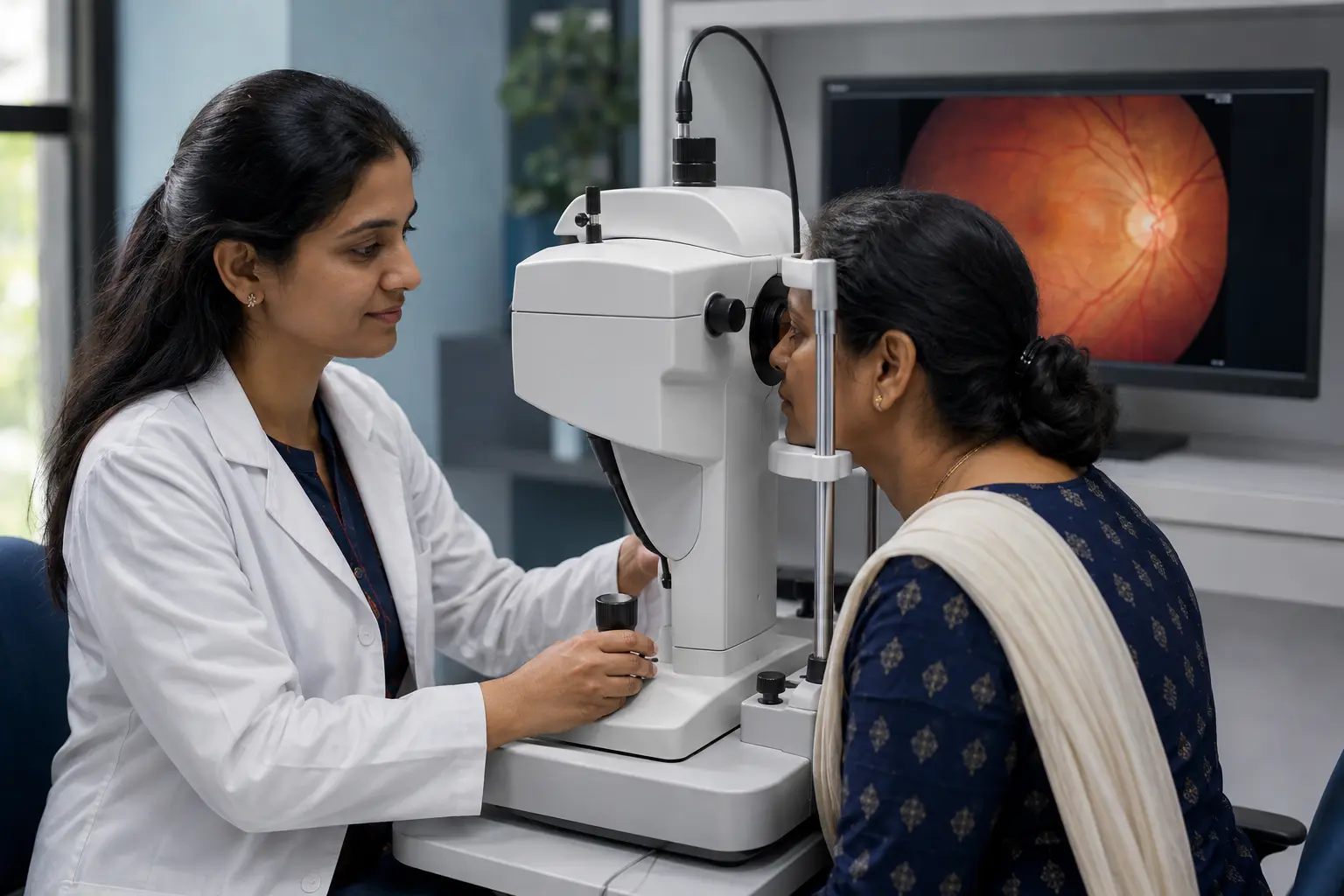
How diabetes damages the eye
Persistently high blood sugar injures the tiny blood vessels throughout the body — and the retina, with its dense network of delicate vessels, is one of the first places this damage appears. This is called diabetic retinopathy. In early stages the vessels leak fluid or bleed slightly; in advanced stages the retina grows fragile new vessels that can bleed severely and detach the retina.
Diabetes also accelerates cataract formation, roughly doubles the risk of glaucoma, and can cause sudden double vision by affecting the nerves that move the eye.
The dangerous part: no early symptoms
Early diabetic retinopathy usually causes no symptoms at all — vision stays perfectly normal while damage accumulates. By the time vision blurs, the disease is often in an advanced stage that is harder and more expensive to treat.
This is why guidelines worldwide — and our practice — recommend that every person with diabetes has a dilated retinal examination at least once a year, even with perfect vision and well-controlled sugar.
Warning signs that need an urgent eye check
- New floaters — dark spots, threads or cobwebs drifting in vision
- Blurred or fluctuating vision that changes day to day
- Dark or empty patches in the visual field
- Difficulty seeing at night or washed-out colours
- Sudden vision loss in one or both eyes — an emergency
What happens in a diabetic eye examination?
The examination takes about 30–40 minutes. Your pupils are dilated with drops so the doctor can see the entire retina clearly. We then examine the retina under the slit lamp and document findings; where needed, retinal photography or OCT scans are advised at a partner imaging centre to measure swelling precisely.
The drops blur near vision for 3–4 hours, so plan not to drive immediately afterwards and bring sunglasses for the trip home.
Treatment options when retinopathy is found
Mild retinopathy is managed with strict sugar, blood pressure and cholesterol control plus closer monitoring. More advanced disease is treated with retinal laser (photocoagulation) or injections of anti-VEGF medicine into the eye — highly effective treatments that preserve vision when done on time. We coordinate this care with trusted retinal specialists and continue your long-term monitoring at our clinic.
- Keep HbA1c within the target your physician sets — sugar control is the foundation
- Control blood pressure and cholesterol — both accelerate retinal damage
- Never skip the annual dilated exam, even when vision feels perfect
- Report floaters, blur or dark patches immediately, not at the next routine visit
FAQ
Common Questions About This Topic
Keep reading
More Eye Health Guides
Eye Health
Cataract Surgery Recovery: A Day-by-Day Timeline with Do's and Don'ts
Modern phacoemulsification cataract surgery takes about 10–15 minutes, but knowing what to expect each day after surgery makes recovery smooth and stress-free.
Read articleEye Health
Dry Eye Syndrome: Why Screen Time Is Drying Out Your Eyes — and What Actually Helps
If your eyes burn, feel gritty or water excessively after a day at the computer, you may have dry eye disease — one of the most common conditions we treat in Pune's IT workforce.
Read articleEye Health
Glaucoma: The Silent Thief of Sight — Early Signs, Screening and Why 40+ Adults Should Test
Glaucoma causes permanent vision loss without pain or obvious early symptoms. The only reliable protection is regular screening — especially after age 40.
Read article
Need Help Deciding Which Specialist to Consult?
Tell us your concern and the clinic team will guide you to the right consultation.
Prefer a callback?
Leave your number and the clinic will call you back.